Taxes
Understand the Israeli tax system: income tax, tax coordination, refunds, credit points, forms, and worker rights.
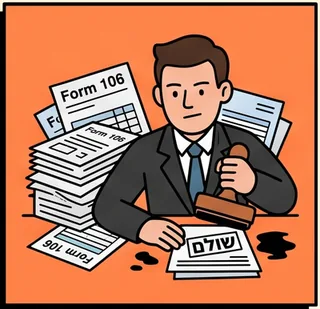
Everything you need to know about Taxes
The Israeli tax system is based on the principle of progressive taxation — the higher your income, the higher the tax rate. Understanding tax brackets, credit points, and the benefits you are entitled to can save you thousands of shekels per year. Despite its complexity, the basics are accessible to everyone.
Whether you are an employee, a freelancer, or both, it is important to know your obligations and rights with the Israel Tax Authority. These guides will help you understand the system and take advantage of every legal benefit available to you.
Income Tax and Credit Points
Income tax in Israel is calculated across six brackets, starting at 10% on the lowest income and rising to 50% on the highest. Every Israeli resident is entitled to credit points that reduce their tax liability. Men receive 2.25 points and women 2.75 points. Additional points are granted for children, academic degrees, military service, and other qualifying factors.
Form 101 is the basic document that every employee fills out when starting a job. It determines your credit points and tax bracket. Filling it out accurately is essential to prevent over- or under-deduction of tax.
Tax Coordination and Refunds
Anyone working for two or more employers must perform tax coordination with the Tax Authority. Without it, the second employer deducts tax at the maximum rate (50%), resulting in excess withholding that can be claimed back. Tax refunds can be requested up to six years retroactively, and the amounts can reach thousands of shekels.
Important Forms
The key forms to know: Form 101 (employee declaration), Form 106 (annual employer certificate of income and deductions), and Form 135 (annual individual tax return). Form 106 is the primary document you need for filing a tax refund request, and it is recommended to keep it for at least seven years.
Employee Rights
Employees in Israel enjoy a range of important tax-related rights: employer pension contributions (up to 7.5% of salary), severance contributions (8.33%), Hishtalmut fund contributions (7.5% of salary), and more. Upon termination, severance pay is tax-exempt up to a certain ceiling. Knowing these rights ensures you receive all the benefits you are entitled to.
Guides & Articles
Financial knowledge for everyone
At Yesh Cash we believe that financial education, risk management and a true understanding of personal finance should not be the exclusive domain of professionals. The portal's mission is to take complex principles from economics, management and financial engineering and make them accessible to the Israeli public at eye level.
The platform was built to provide an objective environment — free of bias and hidden interests. Through a combination of in-depth articles, accurate calculators and smart dashboards, we aim to give every reader the best and most current tools for making sound economic decisions. We supply the infrastructure and the knowledge — so you can build your future.
Frequently asked
פתח/סגור: What is Taxes?
Understand the Israeli tax system: income tax, tax coordination, refunds, credit points, forms, and worker rights.
פתח/סגור: How many guides are in the Taxes category?
This category has 11 guides and articles covering all the important topics in the field.